AI started back in 1956
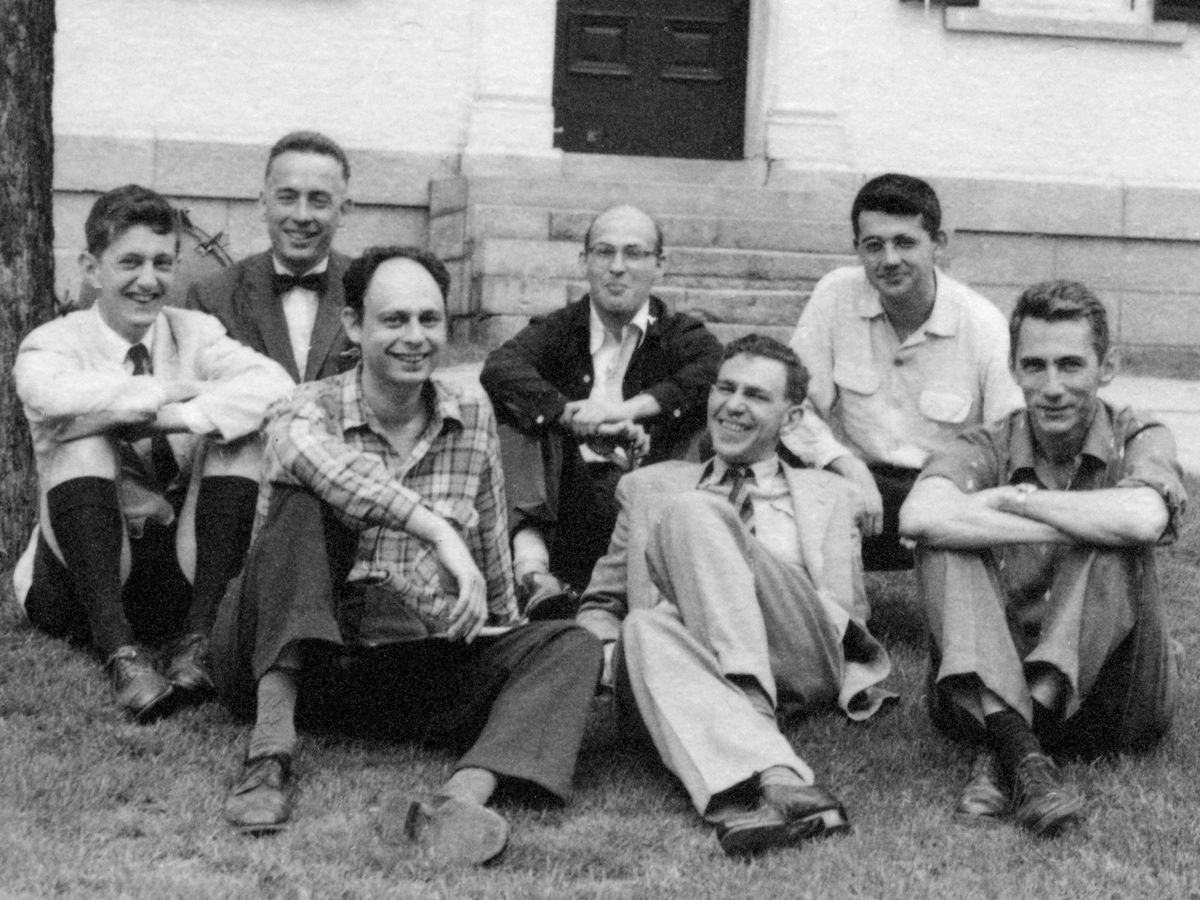
Some of the minds at the 1956 Dartmouth Workshop
AI started back in 1956.
Most people feel shock when they hear that. It feels like it started 7 years ago, not 70.
It’s important to know that though. The AI field has had many ups and downs in its journey.
In 1956, the Dartmouth Workshop brought together some of the best minds of the era (shown in the image - if you can name any of them I would be amazed) to discuss “thinking machines”.
The idea was that “every aspect of learning or any other feature of intelligence can in principle be so precisely described that a machine can be made to simulate it”.
There was a real clamour and excitement, and some promising initial progress. By the 1960s some of those experts from the Dartmouth Workshop were claiming we’d have machines capable of doing any human task “within a generation”.
Obviously, people went wild. Machines to cook your food, clean your room, do your work… amazing!
Money, talent, and opportunity flooded into the space. There was real progress and momentum. People were loving the first AI Summer - the boom period pushing the research to new heights.
But… the reality didn’t meet the hype. Despite making some real advances, the lofty expectations weren’t met. This is where the first AI Winter came in - much like a nuclear winter, there was huge fallout.
Money dried up. Talent exited the space. Researchers had to rebrand to informatics or machine learning. Artificial Intelligence became a dirty word.
We’ve been through a few cycles of this AI summer and AI winter pattern. Periods of glorious promise followed by a crash into reality.
Why is it important to know this?
Well, I would say we’re definitely in an AI summer.
But it’s not the first.
Is it the last? The endless summer? Some people believe so.
They believe the difference today is just the sheer compute power and data we have available. That’s the fuel for modern AI techniques.
But, some see the pattern just repeating. History rhyming. Some good progress, but too much hype that cannot be met in the short term.
Personally I think the job of an AI researcher is to hold both things in your head at the same time. The limits of today with the promise of tomorrow.
Understand the history, and aim for a better future.
The problem is that’s hard to do. Often you either become deluded about how easy it will be to reach that future, or become cynical about the power the tools actually have already.
For what it’s worth, I believe in a future where “thinking machines” one day can do “all the tasks a human can do”… but I think we’re still at the base of that mountain with a long climb ahead of us.
The exciting thing for researchers is how do we speed up that climb? New techniques. New ideas. New experiments.
But there are people promising that we already have AI smarter than humans now, or will by tomorrow.
Encourage them to study some of the history, so they can be more certain they’re not falling into the same traps.